

Commercial Payload Capacity & GVWR Guide
When selecting a commercial truck, understanding weight ratings is just as important as choosing the right body style or engine. Whether you’re hauling tools, equipment, materials, or cargo, knowing how much weight your truck can safely carry helps ensure compliance, safety, and performance. Terms like GVWR, payload capacity, curb weight, and GAWR are commonly used throughout the commercial vehicle industry, but they can be confusing if you’re unfamiliar with truck specifications. Before looking at payload ratings for Chevrolet commercial vehicles, let’s break down the key weight definitions every business owner should know.
Commercial Truck Weight Definitions
GVWR (Gross Vehicle Weight Rating)
The Gross Vehicle Weight Rating (GVWR) is the maximum amount of weight your vehicle is rated to handle as determined by the manufacturer.
GVWR Includes:
- The vehicle itself
- Drivers and passengers
- Fuel and fluids
- Cargo and equipment
- Upfits and aftermarket accessories
Exceeding the GVWR can impact braking performance, handling, suspension components, and tire performance, potentially leading to accidents or mechanical failure.
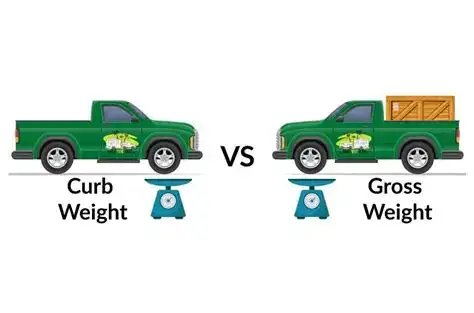
Curb Weight/Ship Weight
Curb weight is the total weight of a vehicle when it is ready to drive, including all standard equipment and necessary fluids such as fuel, oil, and coolant, but excluding passengers, cargo, and additional accessories. Understanding a vehicle’s curb weight is important because it serves as the foundation for calculating how much weight the vehicle can safely carry.
You may also hear this referred to as “ship weight,” particularly when discussing manufacturer specifications and upfitting. While there can be a slight difference depending on how a manufacturer defines the term, both are commonly used to describe the vehicle’s base weight before it begins carrying a load.
GAWR (Gross Axle Weight Rating)
Gross Axle Weight Rating (GAWR) is the maximum amount of weight that can be supported by a single axle.
Every truck has:
- Front GAWR
- Rear GAWR
Even if a vehicle remains below its GVWR, exceeding an axle’s weight rating can create safety concerns and increase wear on tires, suspension components, and other parts.
Tongue Weight
Tongue weight refers to the downward force a trailer places on the truck’s hitch when towing.
Proper tongue weight helps maintain trailer stability and safe vehicle handling. Too much or too little tongue weight can negatively impact steering, braking, and overall towing performance.
Payload Capacity
Payload capacity is the maximum amount of weight a truck can safely carry in addition to its own weight.
Payload includes:
- Cargo
- Equipment
- Tools
- Materials
- Passengers
For many businesses, payload capacity is one of the most important truck specifications because it determines how much work the vehicle can handle.
How Do I Calculate My Trucks Payload Capacity?
Calculating payload capacity is straightforward:
Payload Capacity = GVWR – Curb Weight
Example #1: Pickup Truck
- GVWR: 10,000 lbs.
- Curb Weight: 7,000 lbs.
Payload Capacity: 3,000 lbs.
This means that the truck can safely carry up to 3,000 pounds of combined cargo, passengers, tools, equipment and accessories.
Example #2: Dump Truck
- GVWR: 14,000 lbs.
- Curb Weight: 8,600 lbs.
- Dump Body Weight: 2,000 lbs.
Curb Weight (8,600) + Body Weight (2,000 lbs.) = 10,600
Payload Capacity (14,000 – 10,600) = 3,400 lbs.
This dump truck can safely carry up to 3,400 lbs. of materials, passengers, tools, & equipment.
Chevrolet Commercial Vehicle GVWR & Payload Ratings
Different Chevrolet commercial vehicles are designed to handle different workloads. Understanding their GVWR and payload capabilities can help you pick the right truck for your business.
business.
Here is the GVWR range for each Chevy Model:
Chevrolet Model |
GVWR Range |
Common Uses |
| Silverado 1500 | 6,800-7,600 lbs. | Light-duty hauling, small business use, contractors, everyday work |
| Silverado 2500 HD | Up to 11,400 lbs. | Equipment hauling, landscaping, construction, towing trailers |
| Silverado 3500 HD | Up to 14,000 lbs. | Service bodies, flatbeds, dump bodies, heavy-duty work |
| Silverado 4500HD | 14,001-16,500 lbs. | Box trucks, utility bodies, delivery fleets |
| Silverado 5500 HD | 17,500-19,500 lbs. | Larger service trucks, stake beds, heavier equipment transport |
| Silverado 6500 HD | 21,000-23,500 lbs. | Heavy commercial applications, large box trucks, municipal and fleet operations |
Actual payload ratings vary based on vehicle configuration, cab style, drivetrain, body type, and installed upfits.
Final Thoughts
Understanding GVWR, curb weight, GAWR, payload capacity, and tongue weight can help you make a more informed decision when selecting a commercial vehicle. By knowing how these ratings work together, businesses can choose a truck that safely handles their daily workload while maximizing productivity and performance.
If you need help selecting the right commercial truck for your operation, contact the team at Badger Chevrolet. We’ll help you find a vehicle that meets your hauling, towing, and payload requirements.
0 comment(s) so far on Commercial Payload Capacity & GVWR Guide